Providing gardening and growing information for the residents of Hamilton County, Indiana. This educational website is an outreach effort of Purdue Extension.
Beginning April 10th, the Hamilton County Master Gardener Association, Inc. (HCMGA) will once again be available to answer calls and walk-in questions on lawn and garden on Mondays and Thursdays from 9 a.m. - 12 p.m. and 1 p.m. - 4 p.m. You can also email your horticulture questions to HamiltonGardenline@gmail.com.
The Purdue Extension staff will be on hand to answer questions about food preparation and preservation. Visitors can also schedule an appointment to have their pressure canner gauge checked for accuracy.
Purdue Extension offices across the state provide educational opportunities to Indiana’s communities - our educators, specialists, and volunteers live and work in all 92 counties. Purdue Extension provides practical solutions to real issues – transforming lives and livelihoods in Indiana and around the world.
For more information about the Education Center or Purdue Extension Hamilton County, contact your local office at (317) 776.0854 or visit www.extension.purdue.edu/hamilton.
This time of year many have questions about crabgrass germination and control. Below are several previous Purdue turf tips that answer the most commonly asked questions about crabgrass control.
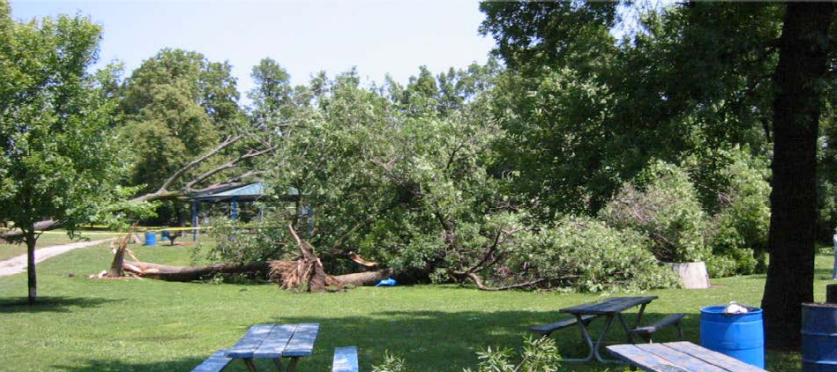
We have had a variety of weather this winter in Hamilton County and across Indiana. Lindsey Purcell, Urban Forestry Specialist with Purdue University, Department of Forestry and Natural Resources shares what to do next after your trees have been damaged during a storm. Click below for the related article. Storms are causing damage and tree cleanup, what to do next
It's not unusual for Indiana weather to have trouble deciding what season it is. Recent warm spells have had many gardeners wondering what to do about bulbs, and perhaps a few plants that are poking their foliage through the soil. Just what should gardeners do about daffodils, dianthus and daylilies poking out of the ground? The good news is that no action is required. We're used to seeing this happen in late winter during a February warm spell. The plants will survive just fine. The longer the mild weather stays around, the more potential there is for damage when below-freezing temperatures return. Foliage that has popped up may be killed back, but the bulbs and storage roots should remain undamaged underground. As the plants completely push out in spring, damaged foliage will appear brown, giving plants a raggedy appearance. But the plants themselves will survive. Flower buds on spring-flowering trees and shrubs are also starting to plump up, but should be fine so far. As buds progress in their development, they become more susceptible to freeze damage. And, spring is still over a month away, leaving plenty of opportunity for fluctuating temperatures. There isn't much we can do about the weather except to sit back and wait to see what Mother Nature has in store for us!
As we enter Invasive Species Awareness week, it is important to remember that early detection is the best way to slow the spread of invasive species. The early detection of Asian longhorned beetle (ALB) by concerned citizens in 1996, and subsequent involvement by community members, has resulted in the containment or eradication of ALB in four states. Continued public involvement will help us protect Indiana trees in the future. You can report invasive species by calling the Invasive Species hotline at 1-866-NO-EXOTIC (1-866-663-9684) or using the free Great Lakes Early Detection Network smartphone app, which can be downloaded on iTunes or GooglePlay. Purdue has put together a YouTube video to demonstrate how easily the app can be used to alert authorities:
If you’re interested in learning more about invasive pests and how to report them, sign up for one of our free Early Detector Training workshops! The workshops will be held on July 11th in Bloomington, July 12th in Aurora, and July 13th in Nashville. You’ll learn about invasive species such as the emerald ash borer, the Asian longhorned beetle, thousand cankers disease, and the hemlock wooly adelgid, their hosts, and how to use the Great Lakes Early Detection Network app to report them.