Monday, August 8, 2016

Diane's Plant of the Week: Dodder

Today I had a sample of one of my favorite and most interesting
Photo credit: Charlie Cambre
plants, a parasitic plant known as dodder. Often times people describe it as orange/yellow spaghetti growing in ditches or crop fields.  Dodder offers no benefit to its host, it strictly derives all nutrition from its victim to survive. 

Dodder does not have any leaves or, for that matter, any chlorophyll to produce its own food. It lives by attaching to a host plant and extracting the host plant’s carbohydrates. It does this by penetrating the host plant with small appendages called “haustoria.” Through the haustoria, dodder will extract the carbohydrates. It is not to the advantage for a parasite to kill its host, thus dodder generally will not kill its host, but if the infestation is severe enough, it may result in the death of the host plant.

Once thought to belong to the morning-glory family, it is now being placed in a family of its own, called cuscutacease. Dodders belong to the genus Cuscuta. The USDA plant data base lists approximately 47 species (http://plants.usda.gov).

Since dodders are annuals and are spread by seed, control
Photo credit: Charlie Cambre
with pre-emergents should work before it can attach to the host. Pre- applications of Kerb have provided good control of dodder in ornamentals and turf. Treflan and Prowl have also been reported to suppress dodder germination. However, Pre-applications often do not retain enough residual activity to provide control for the rest of the season.

Control of dodder with herbicides is dependent on the crop that you wish to control it in. Some herbicides may have an effect on the dodder, but may also either have an effect on the crop or may not be labeled for use in that crop. Always read and follow herbicide labels.

Friday, August 5, 2016

Purdue Hops Team Heads West for Educational Tour


Recently I participated on a Purdue Hops and Small Farms Tour through Washington and Oregon states with the intention to introduce and Purdue Researchers, Extension Educators and Indiana farmers to new specialty crop possibilities. The primary focus of the itinerary included stops to promote collaboration and interaction among team members intermingled with learning innovative procedures, on-going research, and marketing practices.

Our first stop included a visit to Washington State University's 
Puyallup Research and Extension Center where we joined members of their Small Farms Team and discussed organic cover cropping systems among other projects.
That afternoon we traveled to Toppenish Washington the home of Perrault's Hop Farm, a family operated farm established in 1904. Here we spent the afternoon learning production techniques from some of the best hop producers in the country. We also enjoyed a visit with Yakima Chief, Inc and Hopunion LLC a 100% grower owned supplier for their perspective on the business and marketing of hops.

We completed our time in Washington state with a visit to the WSU - Irrigated Agriculture and Research and Extension Center. This stop may have been my favorite stop where we learned to identify common diseases associated with growing hops, such as downy mildew. This fungal pathogen Pseudoperonospora humuli can cause significant yield and quality losses in hop systems depending on hop variety and disease pressure.

Over the next few days we traveled into Oregon where
we 
continued to discuss hop diseases, breeding and well as a diverse group of organic vegetable systems at the Oregon State University's Hyslop Farm.
This educational opportunity was professionally rewarding and well as personally enlightening. The Purdue Hops team developed a bond with Indiana growers to promote hops, research best management practices, and develop resources for this new ever expanding commodity within Indiana. If you are interested in more information on growing hops, feel free to contact me via email at any time or by calling our local Extension Office at (317) 776-0854.

Thursday, August 4, 2016

Celebrate National Farmers Market Week - August 7-13, 2016

Noblesville Farmers Market
From August 7th through 13th, communities across the country will celebrate their local farmers markets during National Farmers Market Week. The impact of these farmer-to-consumer transactions is greater than it appears on the surface. Now more than ever, farmers markets serve as anchors across American communities, positively influencing community health and wealth. Markets result in more viable regional economies and local farm businesses, increased access to fresh, nutritious food, and stronger social networks that help keep communities healthy

This year marks the 17th Annual National Farmers Market Week to honor and celebrate the important role that farmers markets play in local economies. Plan to visit one of Hamilton Counties many Farmers Markets this weekend and support our local businesses.

Carmel Farmers Market - Saturday from May to September Open: 8am-11:30am
Fishers Farmers Market - Saturday May through September Open: 8am -12noon
Noblesville Farmers Market - Saturday from May to October Open: 8am-12noon
Sheridan Farmers Market - Wednesday Open: 4pm-7pm
The Market @ Saxony - Saturday 8am-12noon
Westfield City Market - Saturday June to September Open: 10am-2pm

Tuesday, July 26, 2016

Hamilton County Soil and Water Conservation District - 2016 Native Tree Sale

It's time for Hamilton County Soil and Water Conservation Districts - Fall Native Tree Sale! They have even more species available this year as well as online ordering! Learn more and see what they are offering online. 

Order/Payment deadline: September 3rd  
Tree pick up: All orders must be picked up on Friday September 9th between 2-6 at the Hamilton County 4-H Fairground - Lama Barn in Noblesville. 
Click the link below for more information.  

Thursday, July 7, 2016

Daylilies at great prices- July 16, 2016

Do you love Daylilies as much as I do... if so be sure to attend the upcoming Daylily Sale sponsored by the Hamilton County Master Gardener Association.  

Friday, July 1, 2016

Learn About Growing Hops in Indiana - Saturday July 23

Registration Information Here


Look out for Poison Hemlock - A Toxic Weed Commonly Found Throughout Indiana


Poison hemlock (Conium maculatum) was introduced into North America as an ornamental but escaped cultivation and became naturalized throughout much of the United States. Other common names include deadly hemlock and poison parsley.  This invasive plant typically grows in pastures, roadsides, ditches, waste areas, marshy areas, stream banks, and is found throughout all counties in Indiana.  


Poison hemlock
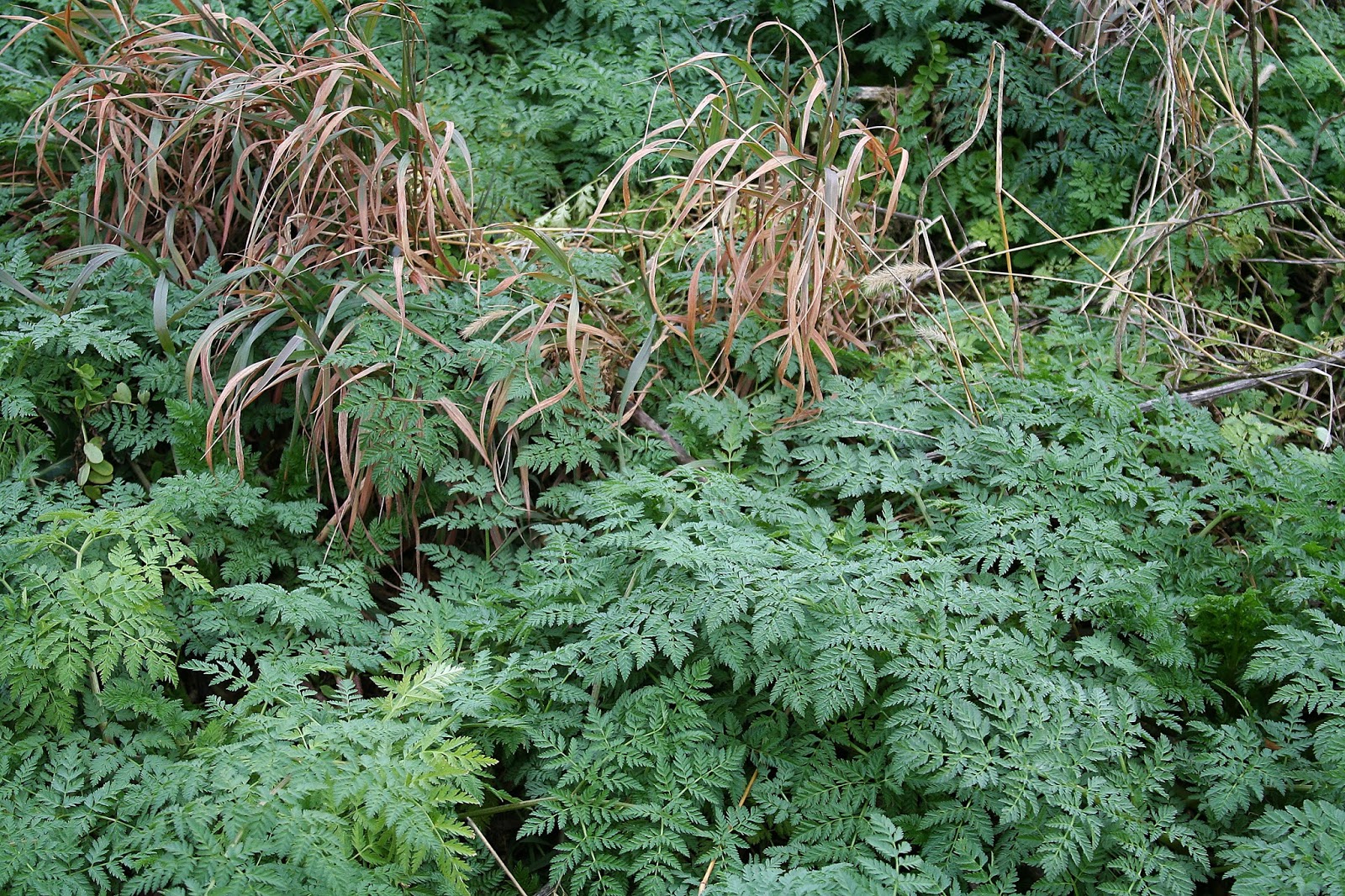
Poison hemlock is a biennial that produces leaves in a basal rosette during its first year and forms an upright flower stalk when it bolts during the second year of growth. Poison hemlock has dissected leaves, which resemble those of parsley. However, the stems and leaf stalks (petioles) of this plant differ from other family members in that they are hairless and have distinctive purple spots or blotches.
Poison hemlock flower

The umbrella-shaped clusters of small white flowers are similar to flower clusters produced by many other species in this family such as Queen Anne's Lace.  They appear in June and continue to form through August. A single plant may produce over 38,000 seeds. However, few of these seeds will remain viable after 5 years of storage in the soil seed bank. 

Poison hemlock is easily controlled manually or with herbicides such as those containing the active ingredient glyphosate or 2,4-D. For more information on control, see this publication from Purdue University.  

All parts of the plant contain toxic substances that cause respiratory failure in humans and other animals if ingested. Seeds and roots are more toxic than foliage; also, toxins are present in greater amounts in plants grown under sunny compared with moist conditions. The taste of leaves and seeds of poison hemlock is reported to be unpleasant, so toxic quantities are seldom consumed.

Similar species:

Wild carrot or Queen Anne's Lace (Daucus carota) looks similar to poison hemlock except its stems and petioles are hairy while those of poison hemlock are hairless and have purple mottling. Wild carrot has a carrot-like taste and smell while poison-hemlock tastes somewhat like parsnip and has a mouse-like smell. 

Wild parsnip (Pastinaca sativa) lacks purple mottling on its stems and petioles, although it is otherwise very similar in appearance to poison hemlock. 

Water hemlock (Cicuta maculata) shares many characteristics with poison-hemlock including hairless stems that have purple mottling and compound leaves. Unlike poison hemlock, water hemlock usually has a cluster of fleshy taproots at its base. Also, habitat may help to distinguish the two as water hemlock grows in marshes and other very wet sites and is generally confined to the central plains and mountainous areas of North America.